Every July, youth football coaches face the same challenge: fund the season before the first whistle blows. Equipment, uniforms, field fees, travel tournaments — it all adds up fast. By the time registration closes and pre-season training starts, most teams need $15,000-$25,000 just to field a competitive roster.
But here's the reality most coaches discover too late: the 6-8 weeks before fall sports season starts is your BEST fundraising window. Families are excited. The community wants to support. Parents haven't been hit with multiple donation requests yet. And your players are fired up about the upcoming season.
This comprehensive guide breaks down exactly how much fall football costs per player, why pre-season fundraising works, and how to launch a team fundraiser that covers your expenses before the season even starts.
The Real Cost of Fall Football: What Coaches Actually Spend
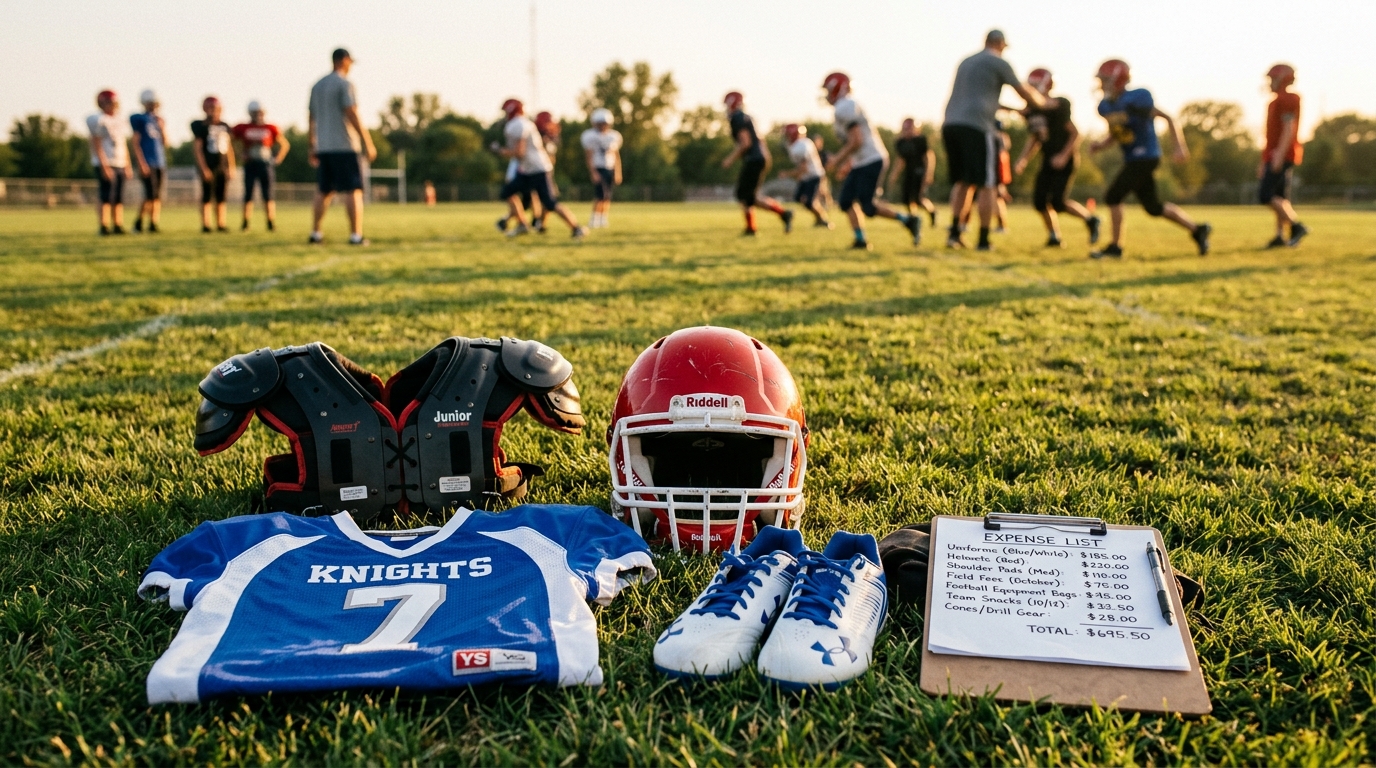
Let's start with the numbers most athletic directors don't talk about in the parent meeting. Here's what it actually costs to outfit and field a youth football team:
| Expense Category | Cost Per Player | Team of 20 Players | Team of 30 Players |
|---|---|---|---|
| Helmet | $150-200 | $3,000-4,000 | $4,500-6,000 |
| Shoulder Pads | $80-150 | $1,600-3,000 | $2,400-4,500 |
| Cleats | $60-100 | $1,200-2,000 | $1,800-3,000 |
| Uniform (jersey, pants, socks) | $100-150 | $2,000-3,000 | $3,000-4,500 |
| Registration & League Fees | $200-400 | $4,000-8,000 | $6,000-12,000 |
| Practice Equipment (cones, dummies, etc.) | $50-100 | $1,000-2,000 | $1,500-3,000 |
| First Aid & Medical Supplies | $25-50 | $500-1,000 | $750-1,500 |
| Travel & Tournament Fees | $150-300 | $3,000-6,000 | $4,500-9,000 |
| TOTAL | $815-1,450 | $16,300-29,000 | $24,450-43,500 |
According to the Aspen Institute's Project Play, families spend an average of $693 per year on youth sports participation fees alone — and that's before equipment costs. For football, one of the most equipment-intensive sports, that number jumps significantly.
The harsh truth: Most coaches either ask parents to pay out-of-pocket ($800-1,500 per player upfront), run emergency fundraisers mid-season when money is already tight, or compromise on equipment quality and team opportunities.
Why Pre-Season Fundraising Outperforms Mid-Season Campaigns
Timing is everything in youth sports fundraising. Here's why the 6-8 weeks before season kickoff is your golden window:
1. Families Haven't Been Asked Yet
By Week 3 of the season, parents have already been hit with uniform fees, team dinner requests, travel tournament contributions, and end-of-season banquet costs. In July? They're fresh, excited, and ready to support.
2. The Community Wants To Help — Before They're Overwhelmed
Local businesses, grandparents, neighbors, and alumni are eager to support youth sports. But once school starts and every team is fundraising simultaneously, donor fatigue sets in fast. Get there first.
3. You Can Actually USE the Money
Mid-season fundraisers raise money for "next year" or "future expenses." Pre-season fundraisers fund THIS season's uniforms, travel, and equipment. Donors see immediate impact — and that drives higher giving.
4. Players Can Participate in Promotion
Kids are excited about the upcoming season. They WANT to share your fundraiser with family and friends. During the season, they're exhausted from practices and games. Use that pre-season energy.
The 6-Week Pre-Season Fundraising Timeline
Here's the proven timeline that gets youth football teams fully funded before the first game:
Week 1: Setup & Launch (Days 1-7)
- Create your team fundraiser page with your funding goal, team photo, and compelling story about your season goals
- Set up donation tiers ($25, $50, $100, $250+) with clear impact statements
- Add a shareable team roster and schedule (builds community investment)
- Enable team/player leaderboards to create friendly competition
- Launch to parents and coaching staff first — get 5-10 early donations before going public
Week 2: Family & Friends Outreach (Days 8-14)
- Each player shares the fundraiser link with 10-15 family members and close friends
- Parents post to their personal social media once
- Send a team-wide email with fundraiser link and sample share language
- Goal: 30-50% of your target raised from inner circle
Week 3: Community Expansion (Days 15-21)
- Post to team social media pages and community Facebook groups
- Reach out to local businesses for sponsorship donations
- Share at local churches, civic clubs, and community centers (with permission)
- Host a pre-season parent meeting or equipment pickup day and mention the fundraiser
- Goal: 60-75% of target reached
Week 4: Push To Goal (Days 22-28)
- Share progress updates ("We're 70% to our goal — help us get to 100%!")
- Highlight impact stories ("Your donations bought helmets for the whole team!")
- Recognize top donors publicly (with permission)
- Send personal thank-you messages from players to donors
Week 5: Final Push & Celebration (Days 29-35)
- Create urgency ("Season starts in 2 weeks — final push to reach our goal!")
- Share photos of new equipment arriving, team in new uniforms, practice action shots
- Announce you've reached your goal (or extend deadline if needed)
- Thank every donor personally
Week 6: Post-Campaign Stewardship (Days 36-42)
- Send a final thank-you video from the team to all donors
- Share season schedule and invite donors to games
- Keep fundraiser page live for ongoing season support
- Plan mid-season update for major donors
This timeline works because it builds momentum gradually, engages your community at the right time, and funds your season BEFORE expenses hit.
How to Set Up Your Pre-Season Team Fundraiser in 10 Minutes
The biggest mistake coaches make? Overthinking the fundraiser setup and never launching. Here's the simple process:
Step 1: Choose Your Fundraising Platform
You need a platform that handles donations, tracks donors, and makes sharing easy. FundMySquad is built specifically for youth sports teams — 0% platform fees on donations, built-in team management, and mobile-friendly donor experience.
Step 2: Set Your Funding Goal
Use the cost breakdown above to calculate your team's actual needs. Be specific: "$18,000 to cover helmets, uniforms, and travel for 25 players." Specific goals get more donations than vague asks.
Step 3: Write Your Fundraiser Story (3 Paragraphs)
- Paragraph 1: Who you are and what you're raising for ("The Oakwood Eagles 12U football team is raising $18,000 for equipment and travel this fall season.")
- Paragraph 2: Why it matters ("Football teaches our kids discipline, teamwork, and resilience. But equipment costs $800+ per player — we don't want any kid to miss out because of cost.")
- Paragraph 3: The ask ("Help us fund the season before it starts. Every donation covers helmets, pads, uniforms, and gives our kids the chance to compete this fall.")
Step 4: Add Team Photos & Season Schedule
Donors give to PEOPLE, not abstract causes. Show your team. Share your season schedule so donors know when to come watch. Make it personal.
Step 5: Set Donation Tiers With Impact Statements
- $25: Covers practice equipment for one player
- $50: Funds a game day uniform (jersey & pants)
- $100: Covers shoulder pads for one player
- $250: Fully outfits one player for the season
- $500+: Team sponsor (name on team banner)
Step 6: Launch & Share
Post the fundraiser link everywhere: team email, GroupMe, Facebook, Instagram, community boards. Make it easy to share — provide sample social media posts parents can copy/paste.
For a step-by-step walkthrough, check out our guide on how to turn your sports team into a fundraiser.
What Top-Performing Youth Football Fundraisers Do Differently
After analyzing hundreds of youth sports fundraisers, here are the patterns that separate $5,000 campaigns from $20,000+ campaigns:
They Start 8+ Weeks Before Season Kickoff
Top performers launch in early July for fall sports. Late starters (mid-August) raise 40-60% less because families have already committed their sports budgets elsewhere.
They Share Specific Equipment Needs
Instead of "Help us fund our season," they say "We need 22 new helmets at $175 each — $3,850 total." Specificity builds trust and urgency.
They Recognize Donors Publicly
Top donor shout-outs, sponsor banners at games, thank-you videos from players — recognition drives higher giving and repeat donations.
They Update Progress Weekly
"We're 50% to our goal!" posts with photos of equipment arriving keep momentum going. Silent fundraisers stall at 30-40% of goal.
They Make Sharing Easy
Provide copy-paste social media posts, pre-written emails to grandparents, and sharable graphics. Remove friction = more shares = more donations.
They Thank Donors Within 24 Hours
Personal thank-you messages (even a quick text) from the coach or team captain dramatically increase donor satisfaction and future support.
Alternative Pre-Season Fundraising Ideas for Football Teams
Not ready for a full donation-based campaign? Here are other pre-season fundraising models that work:
Pre-Season Scrimmage Ticketing
Host a public scrimmage 2-3 weeks before the season and sell tickets ($10-15/person). Families invite friends, alumni attend, and you raise $1,500-3,000 in one evening. Learn how to turn any team event into a fundraiser.
Equipment & Uniform Sponsor Program
Sell sponsorships to local businesses: $500 = helmet sponsor, $1,000 = uniform sponsor, $2,500 = season sponsor (logo on team banner). Businesses get visibility, you get funding.
Parent Social Event + Auction
Host a parent kickoff party and run a silent auction (donated items from local businesses, sports memorabilia, themed baskets). Combine socializing with fundraising. See our guide to silent auction fundraising.
Product Fundraisers (Candy, Popcorn, Etc.)
Partner with a fulfillment provider like Treats Island to sell products with 40-50% profit margins. Players sell to family and neighbors — no upfront inventory cost.
Car Wash + Donation Drive
Host a team car wash but ALSO promote your online fundraiser at the event. Capture donations from people who can't attend in person.
The key: stack multiple fundraising methods during pre-season. A donation campaign + a scrimmage ticket sale + a sponsor program can easily raise $15,000-$20,000 in 6 weeks.
Overcoming the Top 3 Pre-Season Fundraising Objections
Objection 1: "Families Are Already Paying Registration Fees — We Can't Ask for More"
Reframe it: You're not asking families to pay more out-of-pocket — you're helping them crowdsource the cost across grandparents, neighbors, local businesses, and alumni. Most players raise MORE from extended networks than from their own parents.
Objection 2: "We've Never Done a Pre-Season Fundraiser Before — Parents Might Complain"
Communicate early and transparently. Explain exactly what the fundraiser covers, make participation optional, and emphasize you're trying to REDUCE the out-of-pocket burden on families. 95% of parents appreciate the effort.
Objection 3: "We Don't Have Time to Manage a Fundraiser Right Now"
That's why you use a platform that automates donor tracking, thank-you messages, and progress updates. Setup takes 10 minutes. Promotion takes 5 minutes a week. Compare that to mid-season emergency fundraisers that consume hours of your time when you're already overwhelmed coaching.
FAQ
Q: How much should a youth football team aim to raise in a pre-season fundraiser?
Aim for $800-1,200 per player to cover equipment, uniforms, fees, and travel. For a 20-player roster, that's $16,000-24,000. Start with a specific goal based on your team's actual expenses — donors give more to concrete needs ("$3,500 for helmets") than vague goals ("support our team").
Q: When should we launch a pre-season fundraiser for fall football?
Launch 6-8 weeks before your season starts — typically early-to-mid July for fall football. This timing captures family enthusiasm before school starts, avoids competition with other teams' fundraisers, and gives you enough time to reach your goal before equipment orders are due.
Q: What's the best platform for youth football team fundraising?
FundMySquad is built specifically for youth sports teams with 0% platform fees on donations, team roster management, donor tracking, and mobile-friendly sharing tools. Unlike GoFundMe (which takes tips from donors) or Eventbrite (which charges 3.7% + $1.79/ticket), FundMySquad lets you keep 100% of what you raise.
Q: How do we get parents to share the fundraiser with their networks?
Make it effortless. Provide pre-written social media posts, email templates, and text message scripts parents can copy and send to grandparents, neighbors, and friends. Remove the friction of "what do I say?" and sharing rates increase 3-5x.
Q: Should we do a donation-based fundraiser or sell products?
Donation-based fundraisers have higher profit margins (90-97% after processing fees) and less operational work than product sales. Product fundraisers require inventory management, delivery logistics, and only return 40-50% profit. For pre-season time pressure, donation campaigns are faster and more lucrative. You can always add a product component later.
Q: How do we thank donors and keep them engaged throughout the season?
Send personal thank-you messages within 24 hours of each donation. Share progress updates weekly ("We're 60% to our goal!"). Post photos of new equipment arriving and the team in action. Invite donors to games. Send a mid-season impact update. Recognition turns one-time donors into long-term team supporters.
Start Your Pre-Season Fundraiser Today — Your Team Is Counting On It
You already know your team needs funding. You already know equipment costs add up fast. And you already know the season is coming whether you're ready or not.
The only question is: Will you fund the season BEFORE it starts, or scramble mid-season when money is tighter and families are maxed out?
Pre-season fundraising works because your community WANTS to support your team — they just need an easy way to contribute. Create your free team fundraiser on FundMySquad in under 10 minutes, share the link with your team families, and watch your community come together to fund the season.
Your players deserve the equipment, uniforms, and opportunities to compete this fall. Your families deserve an easier way to cover costs than writing $1,000+ checks out-of-pocket. And your community deserves the chance to invest in the young athletes they'll be cheering for all season long.
Start your free pre-season fundraiser now →
For more youth sports fundraising strategies, check out our complete fall sports pre-season playbook and our guide to tournament fundraising.